



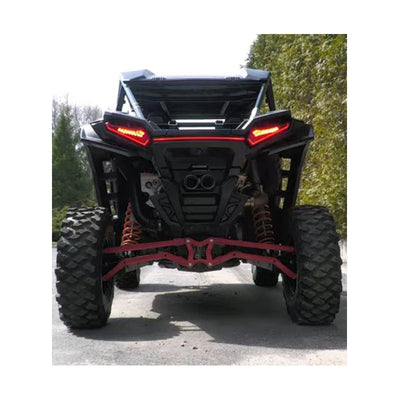
Reading Exhaust Specs
 Reading Exhaust Specs: A Plain-Language Guide for SxS Riders Who Want to Buy Smart
The spec sheet tells you almost everything. Here is how to read it.
Shopping for an aftermarket SxS or UTV exhaust involves a lot of numbers, terms, and product descriptions that are not always explained. Most buyers focus on price and sound clips. That is a reasonable starting point, but the spec sheet on a product page carries a lot of information that can save you from a bad purchase decision. Knowing how to read it properly makes the whole buying process more straightforward.
This guide breaks down the main spec categories you will encounter when evaluating a SxS exhaust system and explains what each one actually tells you.
Fitment Specs: The Most Important Thing on the Page
Before anything else, confirm the exhaust fits your specific machine. This sounds obvious, but fitment specs vary widely in how precisely they are stated. A product page that lists "fits 2018-2024 Polaris RZR XP 1000" is giving you a starting point, but it may not be giving you the full picture.
Within a multi-year model range, chassis configurations, header flange dimensions, and bracket locations can change. A system engineered to fit a 2018 may not align correctly on a 2022 without modification. Look for fitment specs that break down by year, trim level, and variant. The more specific the fitment list, the more engineering work went into making the system actually fit.
Also look for what is explicitly excluded. A product page that lists specific trim levels that are compatible, or that explicitly notes compatibility differences between base, premium, and ultimate trims, is demonstrating a level of engineering rigor that deserves attention.

Material Specs: What the System Is Made From
Exhaust systems operate at extreme temperatures and are exposed to mud, water, rocks, and trail debris across every ride. Material choice has a direct impact on durability, corrosion resistance, and longevity.
Stainless steel is the most common material used in quality aftermarket exhausts. Within stainless, there are different grades. 304 stainless steel is the standard for high-quality exhaust systems. It offers excellent corrosion resistance and performs well under the thermal cycling of powersports use. If a product page specifies the steel grade, that is a good sign. If it simply says "stainless steel" without further detail, it is worth digging deeper.
Some manufacturers use different materials for the header section versus the muffler body, which is a reasonable engineering choice given the different temperature and stress profiles of each section. A spec sheet that breaks this down by component is giving you more useful information than one that gives a single material callout for the whole system.

Sound Specs: What the Numbers and Descriptors Actually Mean
Sound is one of the primary reasons riders buy aftermarket exhaust systems, which makes sound specs some of the most important on the page. They are also some of the most misunderstood.
Decibel measurements, when provided, give you a reference point for overall volume. But decibels alone do not capture the full picture of what an exhaust sounds like. Two systems with similar decibel ratings can sound completely different because of differences in tone, resonance, and how the exhaust note behaves at different RPM ranges. A number tells you loudness. It does not tell you character.
The more useful information on a product page is the qualitative sound descriptor paired with the measurement. Terms like "aggressive," "trail-tuned," or "near-stock" give you a sense of tone and character, not just volume. When evaluating sound specs, look for both the number and the description. A manufacturer who provides both has done the work of explaining what the system actually sounds like, not just how loud it is.
Pay attention to how the sound descriptor is used. Vague language like "sounds great" or "incredible tone" tells you nothing. Specific language that describes the character of the exhaust note, and places it within a clear lineup from quieter to louder options, tells you a great deal.

Maintenance Specs: What the Exhaust Requires Over Time
Not every exhaust system has the same maintenance requirements, and the difference matters over a season or multiple seasons of riding. Some systems use internal packing material to control sound, which degrades over time and requires periodic replacement. Others are designed without packing material and require no maintenance beyond normal cleaning.
If a product page does not address maintenance requirements, it is worth asking directly before you buy. The answer will affect your long-term cost of ownership and the consistency of your system's performance over time.
Hardware and Included Components
A spec sheet should tell you what is in the box. This matters for two reasons. First, the hardware included with the system tells you something about how vehicle-specific the engineering is. Generic fastener kits suggest a universal fit approach. Vehicle-specific hardware suggests dedicated engineering.
Second, knowing what is included prepares you for the install. Systems that require a minor modification, like a center exit design that involves a small cut to the rear fascia, should disclose this clearly on the product page and confirm that the necessary template and hardware are included. If you discover mid-install that you need something that was not in the box, that is a product description problem.

Warranty and Support
Warranty terms are part of the product spec. How long the warranty covers the system, what it covers, and how easy the manufacturer makes it to actually use the warranty all matter. A company that stands behind its product with a clear, straightforward warranty is giving you a signal about their confidence in the engineering.
Customer reviews from verified buyers are also a legitimate part of your spec evaluation. When someone who installed the same system on the same machine describes their experience, that is real-world data that complements the manufacturer's specs. The key is verified. Reviews from confirmed buyers on platforms that do not allow editing or deletion of reviews are meaningfully more reliable than anonymous comments.

|
Browse GGB exhaust specs by make: Polaris| Can-Am| All Makes |
Related Reading
Leave a comment